









5 Ways Traceability Helps Agrochemical & Seed Companies Grow With Confidence
From protecting products to tracking them: why knowing where your product is matters just as much as what's inside it.
In our previous article, we explored how agrochemical companies can better protect their products from counterfeiting and unauthorized distribution. Today, we take the next step: once a product is protected, how do you actually follow it through every stage of the supply chain? That’s the promise of traceability.
Agrochemical and seed companies are operating in an increasingly complex environment: more markets, more distribution layers, and tightening regulations. On top of that, a persistent threat from illegal products continues to erode margins and undermine farmer trust.
How do we know that a pesticide being applied to a soybean field is exactly what the label says it is? How can a distributor be certain a seed lot travelled under the right storage conditions? How does a company respond to a quality incident without weeks of manual investigation?
The answer is traceability, and it is becoming one of the most important capabilities a company in this sector can develop.
What Traceability Actually Means
Traceability, in simple terms, is the ability to follow a product’s journey from origin to end use. In the crop protection and seeds sector, this means tracking an agrochemical or seed product from the moment it is manufactured or formulated, through importation or distribution, all the way to the farm where it is applied or planted.
In practice, it involves coordinating several stakeholders across a fragmented supply chain. The companies that have invested in it are not doing so only because regulations require it, they are doing so because traceability gives them a platform to grow on, unlocking value that ranges from regulatory compliance to stronger farmer trust.
Below are 5 ways traceability is bringing real value to the agrochemical industry.

1. Compliance Becomes a Foundation
The regulatory environment for agrochemicals is tightening and companies with full supply chain visibility are far better positioned to meet new requirements without operational disruption.
Brazil is leading the way in Latin America with the Programa Nacional de Rastreabilidade de Produtos Agrotóxicos e Afins (PNRA)1. The PNRA, established under the oversight of the Brazilian Ministry of Agriculture, Livestock and Food Supply (MAPA), requires that all pesticide products and similar inputs circulating in Brazil be registered in a centralized traceability system. Every batch, every movement, every commercial transaction must be logged and reported.
The goals are clear: combat illegal and counterfeit agrochemicals, improve post-market surveillance, and give authorities the tools to act quickly when a product needs to be recalled or investigated.
And Brazil is not alone. Similar traceability mandates are emerging across markets in Latin America, Europe, and Asia. The direction is consistent everywhere: regulators want full visibility into the supply chain, and they are putting legal frameworks in place to enforce it.
2. Illegal Products Become Easier to Detect
The connection between product protection and traceability is direct. In our previous article, we described how counterfeit agrochemicals and seeds undermine farmer trust and company revenues. Traceability closes the loop: it is the mechanism by which a company can detect when a product is outside its authorized supply chain, therefore helping detect grey markets.
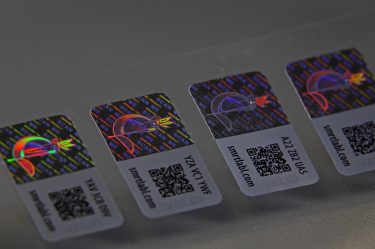
When every legitimate unit carries a unique, verifiable identity, any unit that cannot be traced immediately raises a flag. Traceability protects the farmer from using an illegal or substandard product and gives the manufacturer and the regulator the tools to identify precisely where the counterfeit entered the chain and who facilitated it.
This is the shift from reactive to proactive. Without traceability, a company learns about an illegal product problem when a farmer complains, or a distributor reports unusual returns, often weeks or months after the fact. With end-to-end traceability, anomalies surface before they reach the field.

3. Recalls and Incidents Become Manageable
No company wants to face a product recall or quality incident. But without traceability, even a minor incident can escalate into a reputational and financial crisis.
When a quality defect or safety issue is identified, the first question regulators and risk teams ask is: where is this product right now? If the answer requires weeks of manual investigation across dozens of distributors, the window for effective action quickly closes. Products that should have been pulled from shelves are still being used.
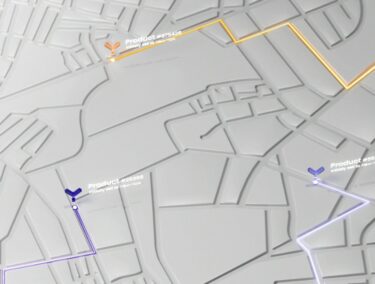
With end-to-end traceability, the same question can be answered in hours. A company can identify every affected lot, trace its distribution path, and communicate directly with the downstream channel to execute removal with documentation that demonstrates compliance.

4. Supply Chain Data Becomes a Growth Engine
Companies that implement traceability gain intelligence about their own market from the data collected.
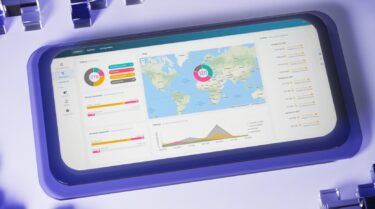
The data generated by tracking products through the supply chain – when batches move, which channels show the highest return rates, which regions have the most active demand, where inventory sits longest – is extraordinarily useful for commercial and operational planning.
Traceability creates a continuous feedback loop between the market and the company, connecting brands directly with what is happening at the farm level. Therefore, opportunities for direct channel engagement with farmers become apparent.

5. Trust with Farmers, Channels, and Regulators
The most enduring benefit of traceability is the confidence it creates and, in agriculture, confidence is the currency that drives long-term growth.
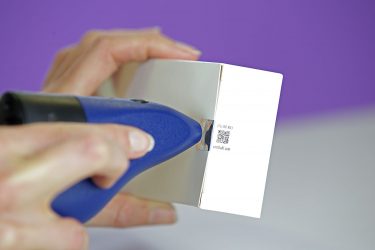
A farmer who can scan a QR code on a package and confirm the product is genuine, correctly stored, and within shelf life is a farmer who trusts the brand, creating trust. A cooperative that can provide full chain of custody documentation to an auditor is a cooperative that positions itself as a serious commercial partner. A company that can demonstrate to any regulatory body that its supply chain is clean and documented earns goodwill precisely when it matters most.
Companies that can demonstrate supply chain integrity attract the distributors and retailers that want to be on the right side of the market. That is a commercial advantage that compounds over time, independent of any single product.
A Roadmap for Deploying Supply Chain Traceability
Building end-to-end traceability demands 4 core elements working together:
- Unique product identification. Every unit, batch, or lot needs a unique identifier (e.g., a code, barcode) that travels with it through the supply chain. This is the foundation everything else is built on.
- Serialization and data capture at key points. Each time a product changes hands, from manufacturer to distributor, from distributor to retailer, that transaction should be recorded and associated with the product identifier.
- Integration with regulatory reporting systems. Connecting to regulators infrastructure – it means understanding what reporting is required and building data flows that satisfy those requirements.
- Downstream visibility tools. Channel partners need to participate in the traceability system. This means providing them with simple tools – mobile scanning applications, straightforward reporting interfaces – that make compliance easy rather than burdensome.
Agrochemical and seed end-to-end supply chain
Manufacturer
ID created for formulated product
Warehouse
Records intake, verifies quality and tracks batches
Distributor
Records intake, verifies quality and tracks batches
Retailer
Records product ID
Farmer
Verifies product quality and checks authenticity if needed
Traceability and Authentication: Two Sides of the Same Coin
Traceability does not exist in isolation. Its full value is realized when paired with authentication: the capability that ensures every product entering the market is authentic.
Together, traceability and authentication form a closed loop in product protection: authentication confirms a product is genuine; traceability follows it from that moment all the way to the farm. One without the other leaves gaps. Companies that invest in both are building something no counterfeit operation can replicate: a verifiable, end-to-end chain of trust.
This is precisely where EDGYN operates. Our brand protection portfolio combines authentication and traceability into a single, integrated capability – from serialization to smart and secure labels. Our solutions are purpose-built for the crop protection and seed industry, designed to work across the complexity of large distribution networks, and proven in extremely regulated markets.